Note to the reader: this article is a general discussion about narratives which may create a harmful mindset that hurts all of us, including men. You can read more about the ethos of this website, and the terms of use.
⚠️ This article also alludes to suicide. If you or someone you know has been affected by this, the Samaritans are available 24/7 on 116 123.
For a while now, there has been some discussion about “toxic” masculinity and, particularly, some disagreement about the term itself.
Nevertheless, it’s important to have a conversation about restrictive ideas of what it means to “be a man”, and what can keep men trapped in what Paul Kivel referred to as “The Man Box”.
In this context, the term “narrow ideas of masculinity” (or “narrow masculinities” for short) can reflect the ways men are kept “trapped” inside The Man Box, and within a system that harms us all, including women.
These narrow ideas of masculinity can appear as sexism – for example, they can dissuade men from doing jobs that are traditionally (and wrongly) seen as “feminine” (like sewing, cooking and cleaning), which men are just as capable of doing. It also (falsely) asserts that only men can do certain jobs; a common sexist joke, for example, is “What’s the difference between women and toast? You can make soldiers out of toast”.
It can also show up in harmful behaviours – as misogyny – where some men feel entitled to abuse women, especially if they see women as “less than”. Beliefs of superiority can imply notions of suprem*cy, and intersect with acts of racism, and hostility against the LGBT+ community where someone asserts harmful and narrow ideas of what it means to “be a man”, or a “real woman”.
Policing Emotions
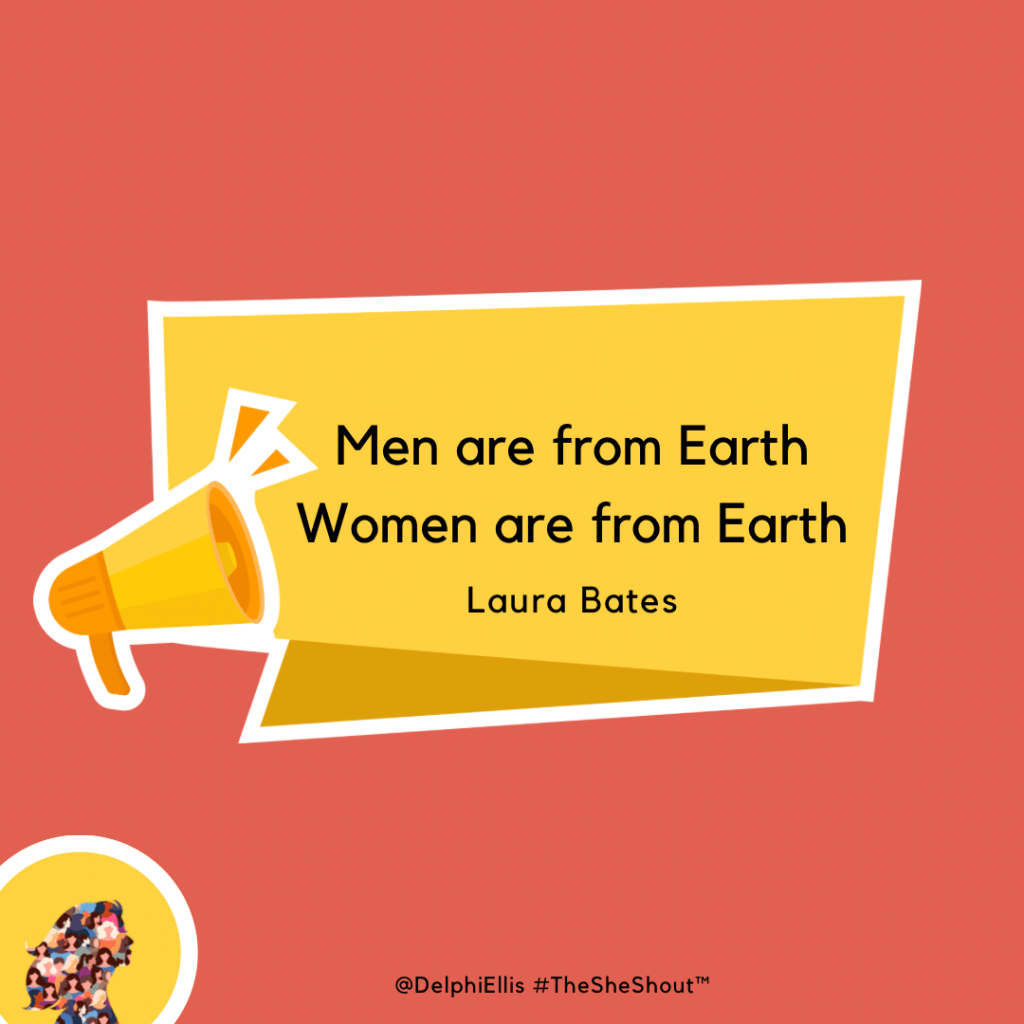
Another way narrow masculinity shows up, is in the frequent rhetoric that “men can’t communicate/express their emotions” which also endorses the idea that “women are too emotional” – a version of the Men Are from Mars, Women Are From Venus concept – neither of which is actually true, nor helpful to men and boys (or anyone else).
Here’s why:
If you’ve ever seen men at a football match, you’ll know many have no trouble expressing how they feel. But some may have been socialised, from an early age, not to talk about certain feelings – the ones he’s been told make him look “soft” or “less of a man” if he shows them; “Big boys don’t cry”.
So it’s not that he can’t express his emotions, but may be that there are few spaces he can do so safely, without fear of ridicule from fellow peers.
This also demonstrates the performative ways men may try to “impress” other men – even at the expense of other relationships, for example, by talking about how many women they’ve had (or want to have) sex with. A common piece of “dating advice” among men is apparently “to get over a woman, you have to get under one”. This tells men “don’t feel sad, use women to “feel better”.”
So a narrow definition of masculinity includes the (false) idea that expressing certain emotions, like love, makes a man look “weak”. These narratives police emotions, that encourage them to stay silent. And that can have real life consequences, especially if they turn to violence, including towards themselves. It requires men to “perform” for other men, rather than show up authentically to the people they may want to care about.
The Love of Power
So if men are trapped, surely they can just leave The Man Box, right? They’re not helpless to walk away.
But they may behave as if they are, if men are being told they are the “real” victims and no one really cares about them – a common trope in the man0sphere – or believe men are in “crisis”, even though women have the worst mental health (most likely as a result of being oppressed or harmed).
Men’s “friendships” may also be conditional on them acting “man enough”, though again a man is not actually helpless to create a new friendship circle which allows him to be authentic with others, or to assert what behaviours he finds acceptable – or not.
But here’s where it gets worrying: some men may stay in The Man Box, from a false sense of entitlement that women “should” meet their “needs”, as housekeeper, therapist and for sex. For those who support the false belief that men are superior, they may even “justify” violence to get their own way. The more power they have, and the more they love that power, the more they benefit from it; the more they will choose to dominate.
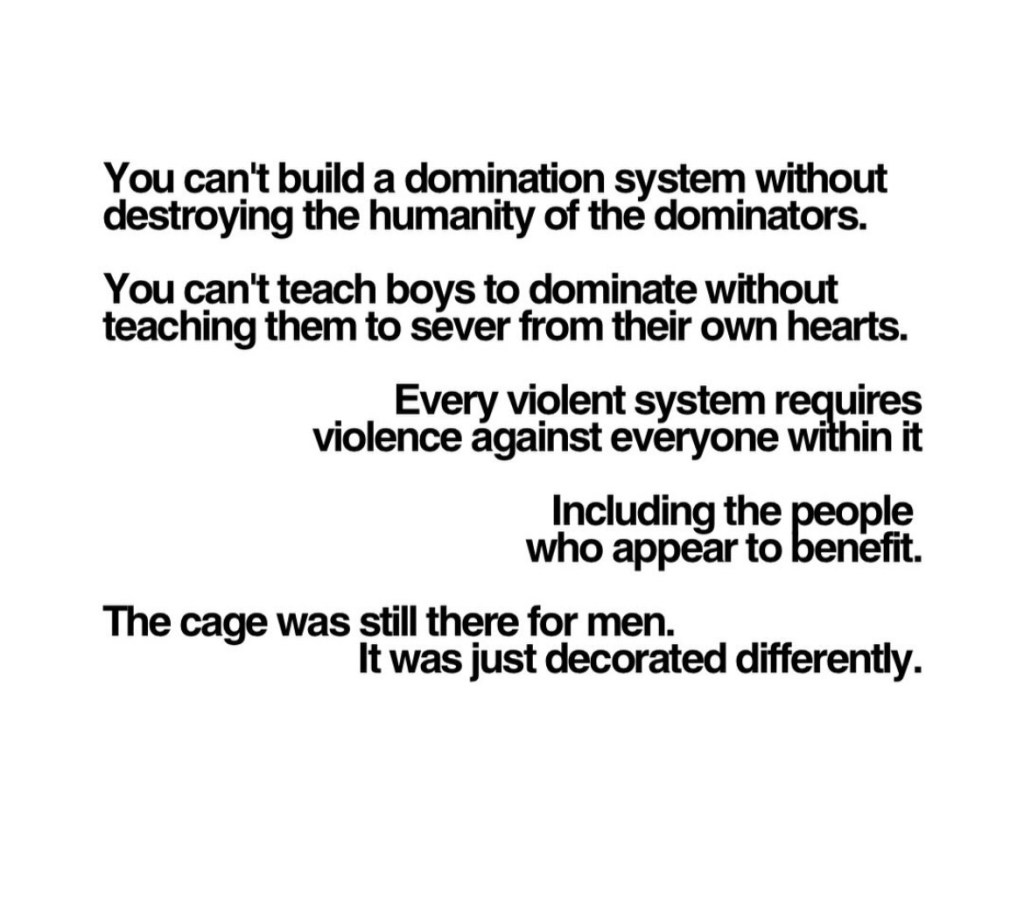
Chuck Derry’s work highlighted this: that men who choose violence do so because it’s functional – it gets them what they want.
Until, that is, a man ages out of the ability to “perform” (or people around him walk away from that narrow mindset), and he becomes lonely as a result of his choices.
What about women?
So as well as pushing women away, narrow masculinities also endorse false stereotypes that all women are “hysterical” or “too sensitive” – again, a way of policing emotions and silencing. These narrow ideas also feed a paradox that asserts, on the one hand, women are so unintelligent and “irrational” that they can’t be in a board room, but so manipulating and clever that women should never be trusted. The idea that men should be one thing and women another ignores our differences and the gifts and skills we all bring to the world, regardless of our gender.
Sadly, even women display these narrow ideas of masculinity when they say we should “lean in” to dominant ways of being (eg, at work), or comply with oppressive culture and become “one of the lads”. Or just be “a good girl” and be quiet.
Here’s some food for thought:
💡What if we challenged all of this? What if we created an expansive narrative around men and boys that said they can be – and feel – anything they want, and said the same to women, girls – everyone?
💡What if we allowed people to feel a range of emotion, and encourage them to do the work in developing skills to regulate and express them healthily?
💡What if we asserted that men and boys are not in fact entitled to dominant behaviours, and that everyone is allowed to exist safely in the world? What if we asserted that no one has the “right” to hurt anyone, especially not because they see themselves as simply “better” than.
That sounds like a peaceful world we could all live in. Why wouldn’t anyone want that?
© Copyright The She Shout™ 2025 | Please read these terms of use.
 The She Shout ™
You must be logged in to post a comment.