Many people work hard to raise awareness of causes close to their heart; the author of this website talks about male violence, particularly towards women, based on lived experience and more than two decades supporting people going through some of the most difficult times in their lives.
When trying to address potentially systemic and structural failures, alongside what can feel like a societal apathy for meaningful change, we can often find we have to keep repeating ourselves. Especially during things like the 16 Days of Activism, which starts with the International Day for the Elimination of Violence Against Women (IDEVAW).
It’s an important conversation we need to have. But it’s also exhausting.
In this effort to make the world a safer place, ironically we might perpetuate the very narratives and culture that can oppress – and harm – us. One example is showing up when we’re not well or expecting ourselves or others to work late, because the cause requires it. Contribution towards collective care is valued and matters, but not at the cost of ours or someone else’s well-being.
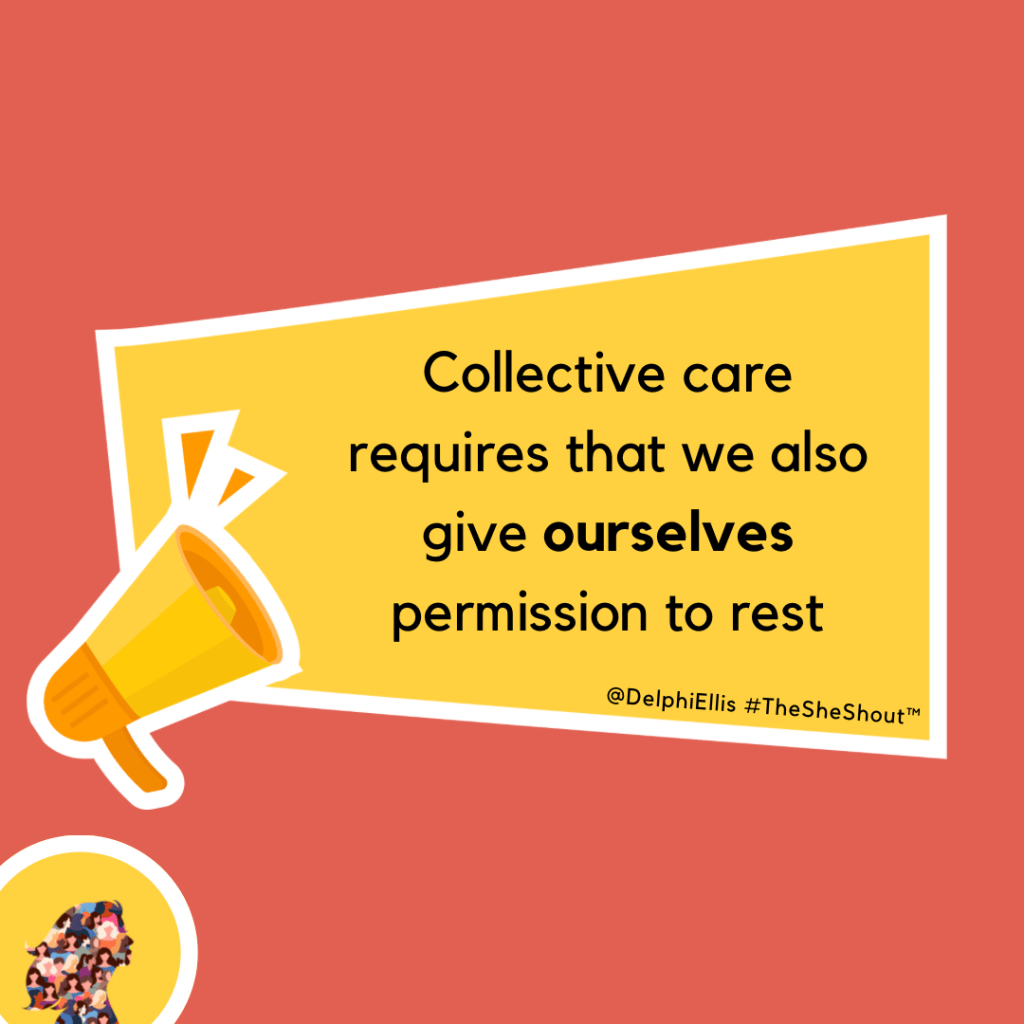
Self- care is often seen as the solution, but can also be a sticking plaster. Tricia Hersey, founder of The Nap Ministry, says the time for shallow wellness work is over and we must interrogate the ways we are exploited, even at work, or the ways we perpetuate the grind culture of being productive, prioritising ‘output’, and the harmful idea we should “keep going no matter what”.
It’s important to rest.
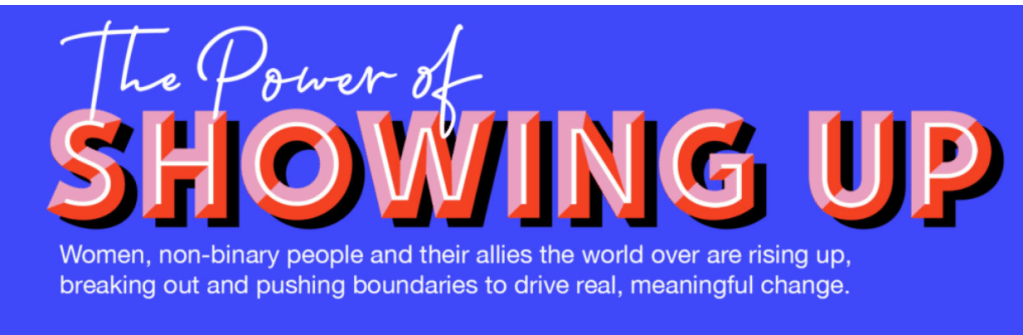
At TEDx London (2023) the theme was The Power of Showing Up. A number of inspiring speakers spoke of the way each of them – and each of us – can facilitate meaningful change, highlighting ways they had faced and addressed injustice.
One was Feruza Afewerki, an Eritrean-British creative storyteller and founder of Gold & Ashes, a visual series that “shares the stories of those who lived and loved in Grenfell.” Feruza lost her niece and sister in the Grenfell tragedy and, following hers and others experiences, she shared stories of the community through a published photobook.
Justice is what love looks like in public
Cornel West
This is difficult work, which is why at the TEDx London event, Seyi Falodun-Liburd and Janey Starling from Level Up, also spoke about the importance of self-care in this arena. Within this was a shared message that prioritising self-care is a way to stand up to the systems that can harm us.
Caring for myself is not self-indulgence, it is self-preservation and that is an act of political warfare.
Audre Lorde
The nature of care extends across all parts of society. Within our own homes, we hope for a caring environment; at work we hope to be cared for by our employer in terms of rights, safety and equity. If we are unwell or in need of emergency assistance, we hope our challenge or crisis will be met by care and consideration for potentially multiple and differing needs. What we sometimes miss, is the opportunity to care for ourselves, within the spaces we occupy. In caring for ourselves, we also collectively care for each other.
Community is a doing word. Caring is a shared responsibility that has to be practiced every day in the big ways and the small ways.
Seyi Falodun-Liburd, We Level Up
With all this in mind, here’s some food for thought:
- 💡Challenge your own narratives: What’s in your personal rule book around self-care? Does it feel self-indulgent, do you feel guilty when you think about having time for yourself? Remember, you can’t pour from an empty cup; you can’t give people energy you don’t have. By prioritising self-care, you act as a role model for others, inspiring them to take care of themselves too.
- 💡Check your community: Self-care isn’t achieved in isolation. Sometimes the messages we receive from people in our circle can help or hinder our attempts to take care of ourselves. What is the collective opinion on self-care around you, and how do we harm or help each other with that approach? We have a collective responsibility to care for each other, but we also need to agree – together – what that might mean or look like. If people in your surroundings don’t endorse self-care, it’s worth considering the role they play in your life, with your welfare in mind (see below).
- 💡Step back: Sometimes we need to step back or away altogether from the things that are harming us. That doesn’t have to be permanent, but it’s important to take a “birds-eye view” of the challenges we face, and how we’re trying to address them. The causes close to our hearts can take up a lot of time and energy, we persevere because we care. Interventions can be exhausting. However, that doesn’t mean that we don’t need a break whether that’s from social media, meetings or people. As author Liz Gilbert once said, “We can love everybody, but some we must love from a safe distance”.
- 💡Change the System: In Hell Yeah, Self Care! Alex Iantaffi and Meg-John Barker talk about ‘Criticism Culture’. We ‘police’ ourselves all the time, comparing ourselves to others, reinforced by the media. We also tend to blame ourselves for the problems we face, which may actually be structural or systemic, like the cost of living crisis, or how misogyny shows up at work. It’s important to look at the way the systems and wider culture (e.g. through media or workplace messaging, like policy and even pay) prevents us from taking care of ourselves. We can and should place emphasis on leaders changing unhealthy narratives, so that self-care might feel a lot easier.
- 💡Keep it simple: Self-care is often in the little things, it can be as simple as changing your bedding, going for a walk and having an early night. It’s also different to everyone though, for some it’s a 25 mile bike ride, for others it’s a warm bath. Find what works for you and do more of it, and try not to feel bad about prioritising ‘me’ time – feel the guilt and do it anyway. You could literally schedule it in your calendar – especially if you have a busy one – so that while you’re trying to care for the world, you’re taking care of yourself too.
We are each other’s harvest; we are each other’s business; we are each other’s magnitude and bond.
Gwendolyn Brooks
© The She Shout™ and The SHE course: Healing for Her™ 2025 | All rights reserved. You can read more about the ethos of this website and terms of use.
This article originally appeared on the If We Act website.
 The She Shout ™
You must be logged in to post a comment.