Featured

This is a conversation about men’s violence, and we should be able to have it

⚠️ Content Warning: this article refers to male perpetrated violence, domestic abuse, sexual violence, harassment and femicide. If you are affected by any of the topics covered in this piece you may find these links (via The She Course™) helpful. The author writes from an integrated feminist, pacifist and (non-denominational) spiritual perspective. This acknowledges that people of all genders can be violent and asserts that all forms of hate are unhealthy. If the content doesn’t reflect your lived experience, readers are encouraged to set up their own website/movement on topics close to their heart, within their means, as this author has. You are also welcome to read about the ethos of this website and terms of use.


This article was originally published in 2020 and there will be more recent research which proves the points made below. However, it felt important to replicate, in the main, what was originally published (with a few amendments/additions) and why the conversation mattered then – and still does.
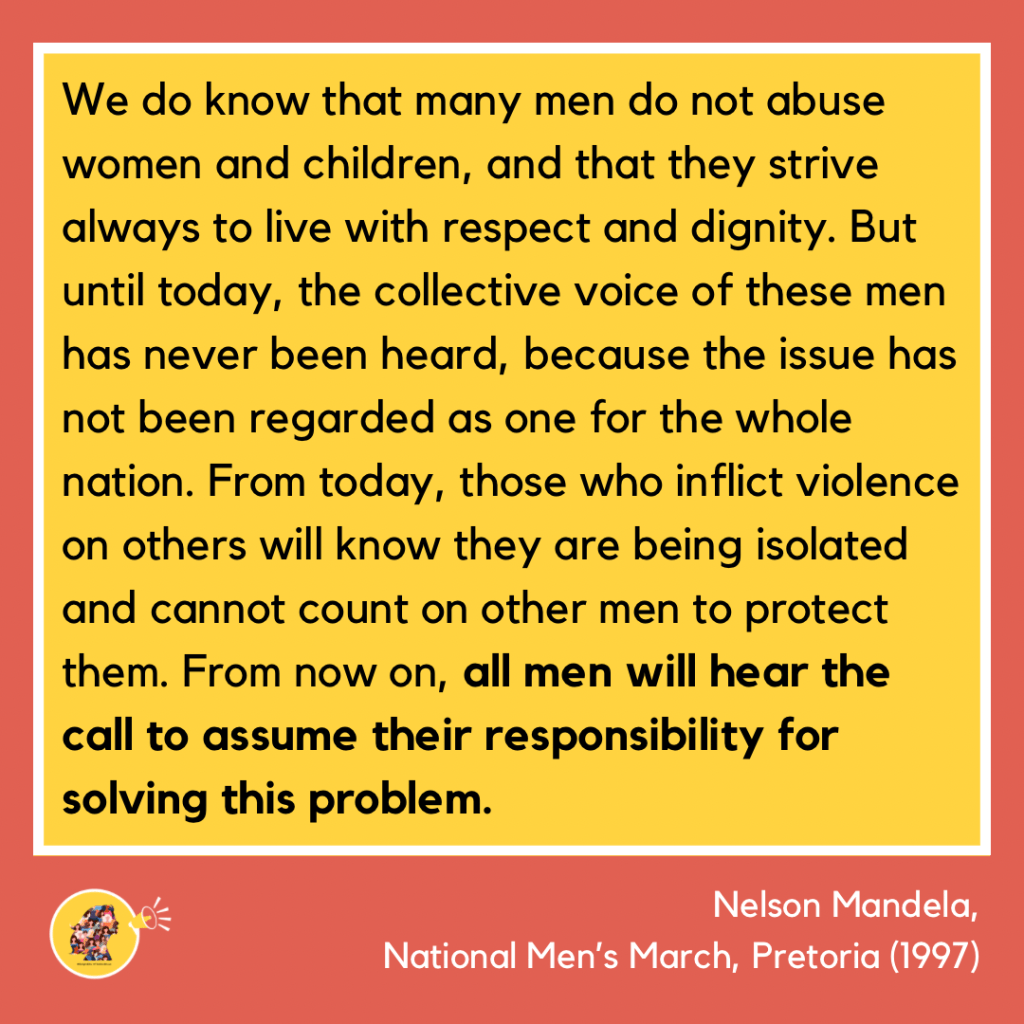

Let’s start with a truth we can surely all agree on: not all men are violent.

But there’s a problem if that’s only mentioned when we try to talk about male violence, particularly towards women. Just as “whataboutery” redirects the conversation towards how violent women can be, it steers the discussion away from the one we need to have – that some men are dangerous.

Of course, women know that not all men present a danger, but we can also never be sure which ones do. Sophie Gallagher, How Men Can Help

Here’s our reality: when women walk along a street, sit at our desk at work, go on a date, or visit a bar – where we should feel safe – research shows we are not. 

Figures suggest that 97% of women have been subjected to sexual harassment in the U.K.. In 2017, the Office for National Statistics (ONS) estimated that 3.4m women had been victims of sexual assault in their lives . This included one million who had been r@ped, or had faced attempted r@pe. 

If we can agree that not all men are dangerous, then we also need to acknowledge that some men are a risk. Because it’s not always obvious which ones can be, when we’re just trying to go about our daily business.

“Policing” women

Many women have “safety tools” to help them feel safe in every day life. 

They’re not “over-reacting”. 

They’re not being “hysterical”. 

They’re not “too sensitive”. 

The evidence shows women are disproportionately at risk, and have to take steps to ensure their safety.

But women’s safety as self-defence is problematic. 

Women having to take these safety measures (known as “self-policing”) has become so normalised, that if they didn’t have or use these tools, they become the target for blame when they are attacked. It’s a problem because it puts accountability in the wrong place.

By saying we should “trust our instincts”, watch what we wear, not go out after dark, not wear headphones, it puts the focus – and responsibility – on women to stop men being violent.

Name it to tame it 

It’s important to have space to assert that the only person ultimately responsible for hurting, controlling or killing is the perpetrator. That even though “not all men” are like that, that two women are being murdered every week by a man. 

It’s important to have a conversation about male violence and why women are too scared to report and the different risks to women of doing so, including lengthy court delays, retraumatisation and fear of repercussions, whether from the harm doer or from the system that’s meant to protect the harmed.

We need to address r@pe myths like “she must be lying”, when only 4% of cases of sexual violence reported to the UK police are found or suspected to be false. In fact, figures suggest a man is significantly more likely to be r@ped by another man, than be falsely accused of that act. So we need to talk about that too … but this conversation is about women and the harm some men do.

⚠️ This video features several celebrities calling for an end to r@pe (released 2025)

It’s essential to be able to talk about the men who continue to harm, including those who display hate for women on social media, especially when those men wrongly feel a sense of entitlement to do so. Men who reject opportunities for love and connection, because they maintain the belief they are owed power and control, especially over women, display  narrow ideas of masculinity, which harm all of us – including men. 

We need to include a discussion with the LGBT+ community, including the fact that a quarter of trans people report domestic abuse. 

We also need to have a dialogue about whether or not safe spaces (like refuges) are accessible for people with disabilities, and why when black women go missing their safety is neglected – and ignored – in a way white women aren’t; an example of how misogyny and racism intersect as Misogynoir. Anyone that goes missing or is attacked should be a cause for public concern – and we should be able to talk about it, and hope that people want to listen. 

We need to allow this dialogue, appreciating the knowledge that men are victims too – including of domestic abuse – as well as on our streets. For those that say “but what about violence towards men?”, we can acknowledge that men matter too. But then we need to address the fact that in those cases the perpetrators are also overwhelmingly male. 

90% of murderers are male and 87% of crime against the person is committed by men. 97% of sexual offences are committed by men. Where the number of male homicide victims has decreased, the number of female victims has increased in the latest year. (ONS

A call to men

Women are not safe. And it’s time we talked about that. 

So this narrative is not suggesting that all men are “bad” or violent. It’s opening a dialogue asking men to do their part to address the problem of male violence. Not by conforming to narrow ideas of “provider and protector”, but by:

  • Demonstrating empathy and compassion for this conversation. Talking about male violence doesn’t take anything away from what men go through, it actually helps them too – especially if they’ve also been harmed by a man;
  • Acknowledging and learning about the issue of women’s safety and male violence. Researchers like Chuck Derry, Paul Kivel and Jackson Katz offer important insights.
  • Recognising biases about women, and addressing dominance-based beliefs of entitlement and ownership
  • Not making excuses for violent men, and recognising that this is a moral and societal issue, not a psychological one. Misogyny is not a mental illness.
  • Being an ally by opening a dialogue with friends and colleagues about what’s acceptable from men – or at least what’s not – in an enlightened society
  • Considering interventions including upstandership, when hearing or seeing other men being inappropriate
  • Recognising that “banter” about women can be a gateway behaviour, leading to other harms. Violence starts long before we think it does
  • Doing the work of emotion regulation, rather than expecting women to meet men’s “needs”
  • Interrogating systems and policies at work that inadvertently endorse misogyny, like dress code or the gender pay gap 
  • Communicating with friends and colleagues that men don’t have the right to harm, control or kill anyone, and that all forms of direct violence – including the words men use when talking about women – won’t be tolerated. 

To be an ally in the conversation around addressing misogyny and harm towards women, is to help reduce the status of men who are otherwise endorsed by the silence of a society that allows them to continue. Because so much misogynist language goes unchallenged, the assumption is that it’s ok. When men challenge abuse as it happens – when they become an Upstander, it can stop. This shows moral courage, integrity and leadership. UN Women have also written about how men can help us all feel safe. 
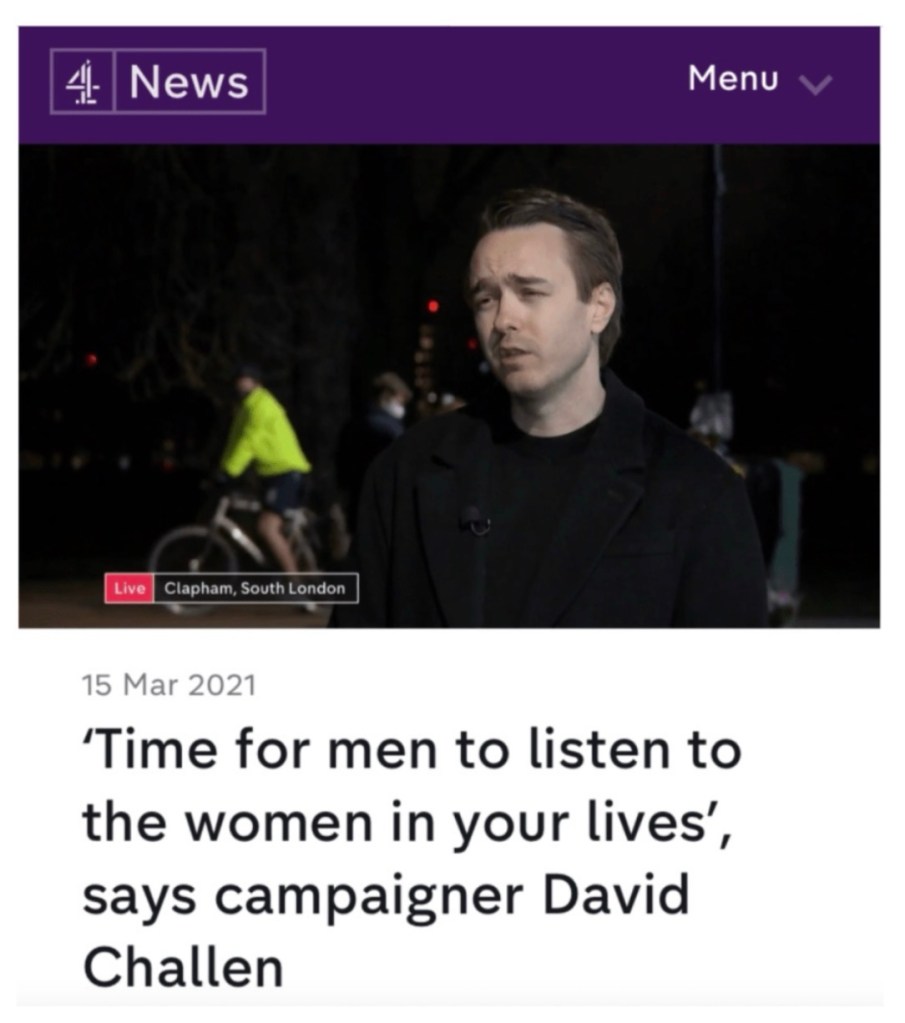
Campaigner David Challen speaking on Channel 4

We know men get hurt too. But this conversation is about women’s safety and male violence. And we should be able to have it. We can challenge that men will do nothing, when we know that 78% of men say they would intervene if they saw a woman being harassed. 

So let’s not use phrases like “not all men”, or engage in “whataboutery” or that it’s “anti-men” to raise this issue. It minimises and derails the conversation – one we need to have – and shuts women down (an act of misogyny in itself). Otherwise we’re writing off all men as “they just can’t help themselves” when we could be saying “Yes, all men can help”. 
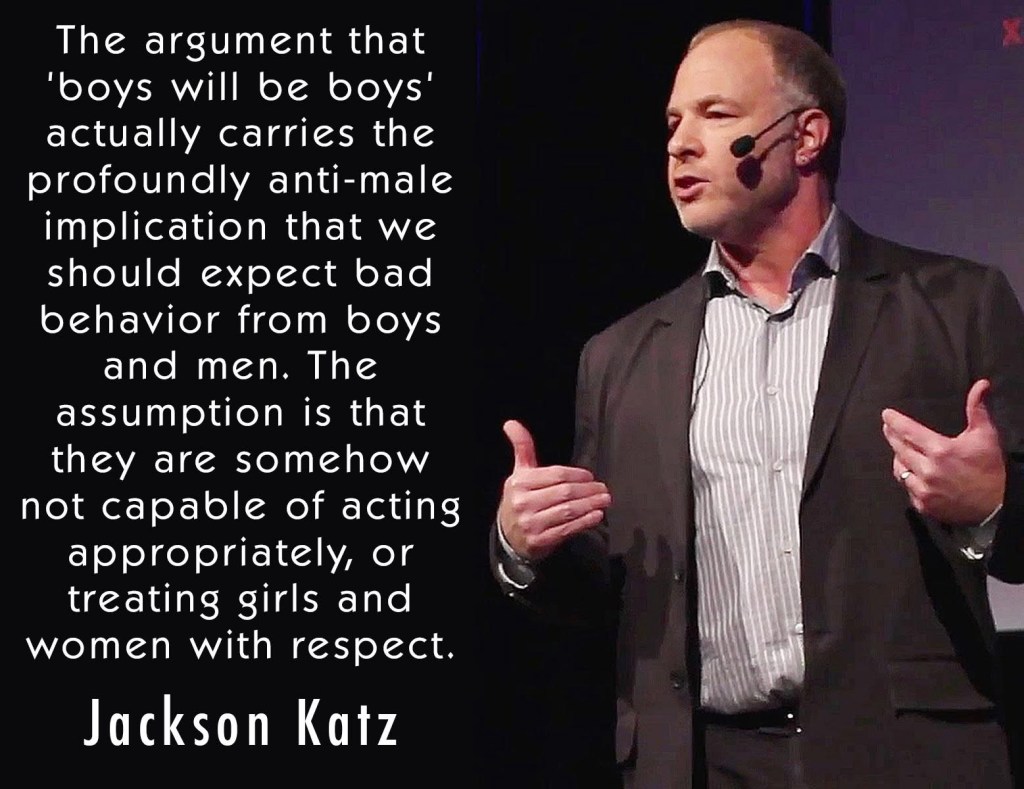
As Jackson Katz writes in “The Macho Paradox”, “I understand women’s skepticism, who for years have been frustrated by men’s complacency about something so basic as a woman’s right to live free from the threat of violence… isn’t it about time we had a national conversation about the male causes of violence?” I think so. I hope you do too.

A world without violence is possible…if we act. 


© The She Shout™ All rights reserved. This blog first appeared in an adapted format around 2020, on other sites hosted by the author, and is duplicated here for reference. 
How to be an Upstander (not a bystander)

⚠️ Content warning: This article references, and links to, news stories that involved male perpetrated sexual violence and murder, alongside discrimination and hate crimes that affect various communities. You can read more about the ethos of this website and terms of use.


This is a long read, so here are some key points if you’re in a hurry:

  • The idea that people won’t act in the face of danger, especially in crowds, appears to be myth. History, latest research and events seem to show that when the moment requires, people will and do step up
  • There are a number of different ways that people can intervene safely. The 5Ds of Intervention offers useful insight.
  • Fierce compassion is not about making excuses for the harm doer, but finding ways to protect the harmed, rejecting all forms of violence.

The History of ‘The Bystander Effect’

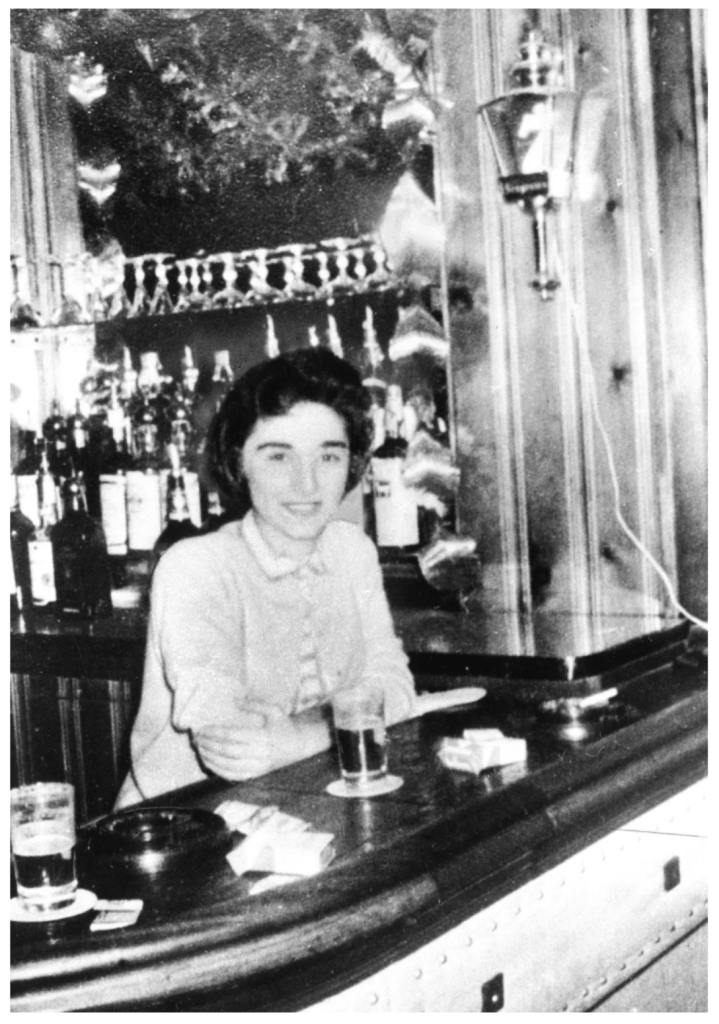
At around 3.15am on 13th March 1964, 28 year old Catherine Susan Genovese, known as Kitty, was found fatally wounded outside her home in the Kew Gardens neighbourhood of Queens, New York City.

Image of Kitty Genovese who was stalked and killed in Queens, New York, in 1964. (New York Daily News) via LA Times

The sexually violent assault and injuries to Kitty by a male perpetrator, which subsequently led to her death, caught wider public attention when, two week’s later, the New York Times apparently reported that 38 people had witnessed or heard the events, and did not come to her aid.

The macabre story became legend in the field of psychology, and a cautionary tale that developed in to a theory: that individuals are less likely to intervene in an emergency because, as part of a group, they feel less responsibility to act.

Subsequent analysis of the available information seemed to support this, and the suggested propensity for this type of public inaction was labelled “Genovese Syndrome” or “The Bystander Effect”.

It painted a grim picture that prompted discussion of a “morality movement”, asking the local community, and beyond, to dig deeper and do better. 

But this “theory” didn’t sit comfortably with some, certainly among some New Yorkers, who couldn’t reconcile that people didn’t, or wouldn’t, act.

So when it came to light that the New York Times report of 1964 appeared to contain inaccuracies, if not erroneous claims that 38 “witnesses” did nothing, some of us looked a little closer.

Here’s what came to light:

1. People did act

In 2016, the New York Times released a statement that said:

“…the problem with the article was that some key facts were wrong…” but then went on to insist“…its broader conclusion was indisputable: that city dwellers are capable of stunning indifference to their neighbors’ life-and-death plights.

And this is where it gets interesting.

It’s been reported by Kew Garden residents of the time, including Joseph De May Jr., a lawyer and historian, that several people did try to intervene; some by calling the police at the time of the incident, while one witness had shouted to the male attacker to leave Kitty alone – which he did, but later returned to violently assault her again.

Importantly, De May also pointed out that few (certainly not “38”) nearby residents were likely to have actually seen the attack, given that it was the early hours of the morning. Nor might they have understood that Kitty’s life was in danger. Many were likely to have been asleep, or at least half asleep, as the horrific events took place.

Another neighbour, Sophia Farrar, found Kitty after the subsequent assaults, and held her in her arms until the ambulance arrived. Farrar’s obituary in 2020, was reported to have said that, contrary to there being such a large number of witnesses who did nothing, “none actually saw the attack completely”.

Suggestions of “stunning indifference” or that people simply stood by and let a violent man end a woman’s life, now seem flawed.

2. Intervention is actually the norm

Research now suggests that the so-called “Bystander Effect” (broadly, the idea that people feel less responsibility to act in a crowd – and so don’t) might be a myth, or at least doesn’t hold water if we take in to consideration what now appears to be a different version of how events played out.

Richard Philpot and a team from Lancaster University observed surveillance footage of violent situations in the UK, Netherlands and South Africa and found, in 90% of cases, at least one person – but typically several – intervened and tried to help.

They also found, unlike the commentary underpinning the “Bystander Effect”, people were more likely to help – the larger the group – not less. This has certainly been demonstrated in acts of violence reported in the media since, where people did step up and intervene.

The disparity in the findings could be explained because Philpot’s research used actual CCTV of people stepping in at a time of conflict, rather than those trying to replicate the “Bystander Effect” through staged scenarios. 

In any case, the good news is, newer research seems to show intervention is actually the norm – not usually avoided – in an emergency.

Contrary to what we so often hear, in some kinds of emergencies, people absolutely do step up and help.

Catherine A. Sanderson – Why We Act/The Bystander Effect

Proponents of “The Bystander Effect” still argue that research since Kitty’s murder proves their theory, and that Philpot’s research focuses only on those incidents which require obvious and immediate action. They say that where it’s not clear that some form of intervention is required, people may delay or decline to act.

However, the original theory stemmed from Kitty’s murder, and the associated commentary that people did nothing – which we now know at least in part, seems to be inaccurate. On that basis, Philpot’s findings are worth serious consideration. It offers hope that people can, will and do act.

This is supported by research in 2021 that suggested more than three quarters of men (78%) would intervene if they saw a woman being harassed. Or a study from Penn State that suggested the more life-saving skills you have, the more likely you are to step in.

3. Hate and prejudice as a factor

The reasons some don’t intervene may be varied and complex. As suggested, ambiguous scenarios may leave people not knowing if there even is a problem and, if so, what to do. They may feel self-conscious – or perhaps unsafe – if they misunderstand a moment. Fear and lack of safety – and training – are all valid reasons for not intervening.

So, we can agree that some individuals don’t intervene for what they may consider to be “good” reason.

But perhaps we should also then consider a potentially less palatable reason some don’t: that some bystanders may hold unhealthy beliefs and attitudes which mean when someone is being harmed, they don’t intervene because they don’t see the problem, especially if it means they can protect their own status.

In the case of a woman being harassed in public, for example, some argue that men choose not to act in these situations because of the “bro code”: that it’s not socially acceptable to call a man out, especially if no one else is doing it.

But that implies (some) men would rather ignore a harmful act towards a woman, if it means keeping a male friend onside, and implies that women – and their safety – is less important than men’s. It also suggests that type of friendship is conditional on allowing displays of misogyny, while accepting how dangerous some men can be, especially if challenged.

This attitude endorses an ideology of suprem@cy where men “perform” for other men, and where women are seen as “less than”, even if it means she then gets hurt. In the case of male violence, a key factor is that some men wrongly feel entitled, and believe they have the “right”, to harm; some may even imply their violent actions are for “the greater good”. Shamefully, in a display of mental gymnastics to “justify” his actions, when Kitty’s murderer later wrote of his crime, he said the murder was tragic “but it did serve society, urging it as it did to come to the aid of its members in distress or danger.” 

Other ways this harmful ideology shows up, is where Muslim people experience Islamophobia, and Muslim women in particular are “policed” frequently for what they wear, when men generally aren’t. Where racism intersects with male violence, black women experience what’s come to be known as Misogynoir.

People in the LGBTQ+ community are subjected to homophobia and anti-trans narratives, though it’s often trans women that are in the spotlight, not transmasc people or trans men.  Notions of male suprem@cy can endorse narrow ideas of masculinity and what it means to “be a man” or “a real woman”, and act as a driver for hate and violence. It can show up as someone “teaching a lesson”, or sees themselves as “being on a mission”.

The case of Eudy Simelane

It’s understood now that Kitty was a lesbian, who lived with her girlfriend Mary Ann Zielonko, although to the outside world they were simply room mates. There is currently no suggestion their relationship had anything to do with Kitty’s murder, or that it may have influenced how people responded (if there were indeed those that didn’t).

At the time of this recording, Mary Ann understandably felt people could have done more to save Kitty, based this on the media reporting of the time, not knowing the efforts of several nearby residents that have since come to light. New evidence points to the fact that people did try to help, in their own way, and that matters.

While there is no sign of prejudice in Kitty’s case, it feels important to mention here, an alarmingly common act of male violence termed “corrective ra pe”. This is the false view, held by some violent men, that lesbians need to be “cured” and, horrifyingly, that sexual violence is the “medicine”. This was cited in the murder of Eudy Simelane, a 31 year old woman and openly out lesbian who, at the time of her brutal sexual assault and murder in 2008, was on a night out in KwaThema with friends. The scale prejudice and how it shows up in male violence, mustn’t be underestimated. It’s also worth pointing out here that men are also most at risk from violent men.

Hate and harm shows up in myriad ways, and where you find one type of bigotry, you’ll often find others. Other examples include how society enables harm through prejudice towards the victim – i.e. victim blaming – and how some people, even those with good intentions, will pathologise male violence, excusing it as “he’s not well” or falsely claim “he couldn’t help himself”. Misogyny is not a mental illness.

Kitty’s killer was interrupted during the first assault, and she was alive at that point; he knew his actions were wrong and ran away. He could have chosen to stay away but he made a choice to go back. He knew exactly what he was doing and, like all misogynists, appeared to wrongly see Kitty as an object to satisfy his “needs”, or someone that “deserved” what she got. Either way, he had not “lost control”.

The Bystander Approach: Upstandership

Whether we agree on if or how people step in, we can acknowledge the importance of bystander intervention in violence prevention – known as Upstandership. This can be demonstrated in different ways, when it’s safe to do so. Imagine if society had spent 50 years focusing on preventing what Kitty’s killer did, by focusing on what he chose to do, instead of the potential myth that others did nothing. Rather than arguing the theory, we can consider meaningful approaches.

The bystander approach offers opportunities to build communities and a society that does not allow [sexual] violence. It gives everyone in the community a specific role in preventing the community’s problem…

Banyard et al, 2004

The SHE Course is a 12 week course for women subjected to male violence, with a focus on domestic abuse.

We now know that humans are not born wanting to hurt people, and can demonstrate empathy and compassion before they can even speak. Hate is taught and misogyny, in the context of this discussion, shows up in insidious ways (like a man physically moving a woman out of the way at work, or telling a woman to “watch her tone”), as well as obvious ones like sexual violence and femicide.

Intervention can look like many things – including community messaging – not simply stepping in to challenge the harm doer, and should always be done safely. Knowing what to do – and when to do it – is a key component for meaningful action. The 5Ds of Intervention offers some useful insight should only ever be done when safe to do so. Here are some examples:

  • Distract – ignore the person harassing, and talk directly to the person being harassed about something completely different
  • Delegate – tell someone about what is or has happened
  • Document – make a record of what you can remember of the event, so that you can report later
  • Delay – wait for the event to pass, but check on the person who has potentially been harmed, and see how they’d like to proceed
  • Direct – call out the person harming

Violence starts long before we think it does and science tells us change is possible. When we reject narratives and harmful ideologies as a global community, we promote ways to intervene, safely; the safer the world could be for all of us, including men. If we are to prevent violence, we must address harmful beliefs and attitudes at a community level, seeing this as a moral and societal issue, not simply a psychological one. We must also consider if, when and how we act.

Whether it’s finding healthy ways to confront an abusive boss or a man encouraging a male friend to stop using sexist language, we can collaborate collectively as communities through compassionate action, to let harm doers know their harmful ways will not be tolerated. 

The role of fierce compassion

Compassion itself is about recognising and alleviating suffering; in this context it’s focused on the harmdoer stopping (not explaining away what he did) and protecting the harmed.

Fierce compassion actively challenges harmful rhetoric, in a number of ways, including with humour or satire. It is not about making excuses for someone, but addressing the harm they do. It is actively calling someone or something out – Upstandership – because of the damage it’s doing, as a way to make it stop.

In all these cases, the most appropriate people to stand up to men is men.

In any event, we mustn’t forget Kitty – a young woman, with dreams of opening an Italian restaurant. Or Eudy Simelane, who was just about to start a new job at a prestigious company and, as a qualified football referee, was all set to serve as a line official in the 2010 men’s World Cup.

These women and all those whose lives have been and continue to be brutally cut short, have been subjected to male violence for no other reason than these violent men wrongly believed they had the “right” to do so. Whether people stepped in or up or not, the blame for what happened rests squarely on these men’s shoulders. And unless we keep the spotlight firmly on those men responsible, we will remain distracted from the harm they do, and it will continue.

May Kitty and Eudy rest in peace.

 © The She Shout™ and The SHE course: Healing for Her™ 2025 | All rights reserved rights reserved. This article was originally published in 2023 on the If We Act website.

Causes matter, but so do you; a gentle reminder to rest

Many people work hard to raise awareness of causes close to their heart; the author of this website talks about male violence, particularly towards women, based on lived experience and more than two decades supporting people going through some of the most difficult times in their lives.

When trying to address potentially systemic and structural failures, alongside what can feel like a societal apathy for meaningful change, we can often find we have to keep repeating ourselves. Especially during things like the 16 Days of Activism, which starts with the International Day for the Elimination of Violence Against Women (IDEVAW).

It’s an important conversation we need to have. But it’s also exhausting.

In this effort to make the world a safer place, ironically we might perpetuate the very narratives and culture that can oppress – and harm – us. One example is showing up when we’re not well or expecting ourselves or others to work late, because the cause requires it. Contribution towards collective care is valued and matters, but not at the cost of ours or someone else’s well-being.

Self- care is often seen as the solution, but can also be a sticking plaster. Tricia Hersey, founder of The Nap Ministry, says the time for shallow wellness work is over and we must interrogate the ways we are exploited, even at work, or the ways we perpetuate the grind culture of being productive, prioritising ‘output’, and the harmful idea we should “keep going no matter what”.

It’s important to rest.

At TEDx London (2023) the theme was The Power of Showing Up. A number of inspiring speakers spoke of the way each of them – and each of us – can facilitate meaningful change, highlighting ways they had faced and addressed injustice.

One was Feruza Afewerki, an Eritrean-British creative storyteller and founder of Gold & Ashes, a visual series that “shares the stories of those who lived and loved in Grenfell.” Feruza lost her niece and sister in the Grenfell tragedy and, following hers and others experiences, she shared stories of the community through a published photobook.

Justice is what love looks like in public

Cornel West

This is difficult work, which is why at the TEDx London event, Seyi Falodun-Liburd and Janey Starling from Level Up, also spoke about the importance of self-care in this arena. Within this was a shared message that prioritising self-care is a way to stand up to the systems that can harm us.

How collective care can change society | Janey Starling & Seyi Falodun-Liburd 

Caring for myself is not self-indulgence, it is self-preservation and that is an act of political warfare.

Audre Lorde

The nature of care extends across all parts of society. Within our own homes, we hope for a caring environment; at work we hope to be cared for by our employer in terms of rights, safety and equity. If we are unwell or in need of emergency assistance, we hope our challenge or crisis will be met by care and consideration for potentially multiple and differing needs. What we sometimes miss, is the opportunity to care for ourselves, within the spaces we occupy. In caring for ourselves, we also collectively care for each other. 

Community is a doing word. Caring is a shared responsibility that has to be practiced every day in the big ways and the small ways. 

Seyi Falodun-Liburd, We Level Up

With all this in mind, here’s some food for thought:

  1. 💡Challenge your own narratives: What’s in your personal rule book around self-care? Does it feel self-indulgent, do you feel guilty when you think about having time for yourself? Remember, you can’t pour from an empty cup; you can’t give people energy you don’t have. By prioritising self-care, you act as a role model for others, inspiring them to take care of themselves too.
  2. 💡Check your community: Self-care isn’t achieved in isolation. Sometimes the messages we receive from people in our circle can help or hinder our attempts to take care of ourselves. What is the collective opinion on self-care around you, and how do we harm or help each other with that approach? We have a collective responsibility to care for each other, but we also need to agree – together – what that might mean or look like. If people in your surroundings don’t endorse self-care, it’s worth considering the role they play in your life, with your welfare in mind (see below).
  3. 💡Step back: Sometimes we need to step back or away altogether from the things that are harming us. That doesn’t have to be permanent, but it’s important to take a “birds-eye view” of the challenges we face, and how we’re trying to address them. The causes close to our hearts can take up a lot of time and energy, we persevere because we care. Interventions can be exhausting. However, that doesn’t mean that we don’t need a break whether that’s from social media, meetings or people. As author Liz Gilbert once said, “We can love everybody, but some we must love from a safe distance”.
  4. 💡Change the System: In Hell Yeah, Self Care! Alex Iantaffi and Meg-John Barker talk about ‘Criticism Culture’. We ‘police’ ourselves all the time, comparing ourselves to others, reinforced by the media. We also tend to blame ourselves for the problems we face, which may actually be structural or systemic, like the cost of living crisis, or how misogyny shows up at work. It’s important to look at the way the systems and wider culture (e.g. through media or workplace messaging, like policy and even pay) prevents us from taking care of ourselves.  We can and should place emphasis on leaders changing unhealthy narratives, so that self-care might feel a lot easier.
  5. 💡Keep it simple: Self-care is often in the little things, it can be as simple as changing your bedding, going for a walk and having an early night. It’s also different to everyone though, for some it’s a 25 mile bike ride, for others it’s a warm bath. Find what works for you and do more of it, and try not to feel bad about prioritising ‘me’ time – feel the guilt and do it anyway. You could literally schedule it in your calendar – especially if you have a busy one – so that while you’re trying to care for the world, you’re taking care of yourself too.

We are each other’s harvest; we are each other’s business; we are each other’s magnitude and bond.

Gwendolyn Brooks


© The She Shout™ and The SHE course: Healing for Her™ 2025 | All rights reserved. You can read more about the ethos of this website and terms of use.

This article originally appeared on the If We Act website.

The She Shout™ cares about men too. Do you?

Content Warning: this article (and website) refers to male perpetrated violence. You can read more about the ethos and terms of this website.


This article was written due to a long-standing commentary that men’s “rights” are being “forgotten”, blaming the conversation about male violence we need to have and that “feminism” is harming men and boys. This article is aimed at those people. 


For a long time now (not just since the release of Adolescence), there has been a recycled panic, wringing of hands and words like “crisis” and “epidemic” banded about, to centre men’s loneliness, rather than acknowledging – and even as a distraction from – the reality of men’s violence.

Some academics, some working in Men’s Health and some in the psychiatric/psychology world say we should “think of the men”. And you know what, they’re absolutely right.

Every conversation in The She Shout™ (and affiliated The She Course™) talks about men.

Because it recognises that because of Man Box Culture and male suprem*cy, men are being sucked into and kept so small by narrow ideas of masculinity, that some think power and control is more valuable than learning and connection.

In some cases, men are even the architect of their loneliness, if their beliefs insist that all women should meet their needs and are responsible for “keeping them happy”, rather than doing the work of being enough without the status of relationship.

It recognises that men are expected to perform – for other men – confined by restrictive ideas of what it means to be a “real man”, rather than an expansive idea of what it means to be fully human.

Some tell us it’s men that need justice from Feminism – even though it’s predominantly men harming other men too.

Anti-feminist flyers left on cars at Stourbridge train station (Source: Sahdaish Pall)

And they only ever seem to care about men’s safety, when women try having a conversation that asks violent men to stop. There’s a paradox when some men will stand in the streets and say they want to “protect our women”, even when 41% of those in one case had been perpetrators of domestic abuse.

All while apparently ignoring that men are also being harmed by violent men, just as sons and fathers are being bereaved of their mothers and daughters by violent men too. 

They say “not all men are violent” even though no one is saying that all men are, but none of us can know which is which just by looking at them. It seems some would rather have an “either/or” discussion, choosing men over everyone else, than consider it “and/and” conversation that includes the harm being done to women, and everyone else.

There are those that simply want us to “soften the language” or ignore us altogether, instead of asking men to do the work of Upstandership, emotion regulation and holding violent men to account. 

It leads us to wonder if maybe some people should just admit that they don’t really care about women, or men’s health at all, if they just think men should have it all.

The She Shout™ cares about men. Do you?


© The She Shout– All rights reserved.

Narrow masculinities (and what that really means)

Note to the reader: this article is a general discussion about narratives which may create a harmful mindset that hurts all of us, including men. You can read more about the ethos of this website, and the terms of use.

⚠️ This article also alludes to suicide. If you or someone you know has been affected by this, the Samaritans are available 24/7 on 116 123.


For a while now, there has been some discussion about “toxic” masculinity and, particularly, some disagreement about the term itself.

Nevertheless, it’s important to have a conversation about restrictive ideas of what it means to “be a man”, and what can keep men trapped in what Paul Kivel referred to as “The Man Box”.

In this context, the term “narrow ideas of masculinity” (or “narrow masculinities” for short) can reflect the ways men are kept “trapped” inside The Man Box, and within a system that harms us all, including women.

These narrow ideas of masculinity can appear as sexism – for example, they can dissuade men from doing jobs that are traditionally (and wrongly) seen as “feminine” (like sewing, cooking and cleaning), which men are just as capable of doing. It also (falsely) asserts that only men can do certain jobs; a common sexist joke, for example, is “What’s the difference between women and toast? You can make soldiers out of toast”.

It can also show up in harmful behaviours – as misogyny – where some men feel entitled to abuse women, especially if they see women as “less than”. Beliefs of superiority can imply notions of suprem*cy, and intersect with acts of racism, and hostility against the LGBT+ community where someone asserts harmful and narrow ideas of what it means to “be a man”, or a “real woman”.

Policing Emotions

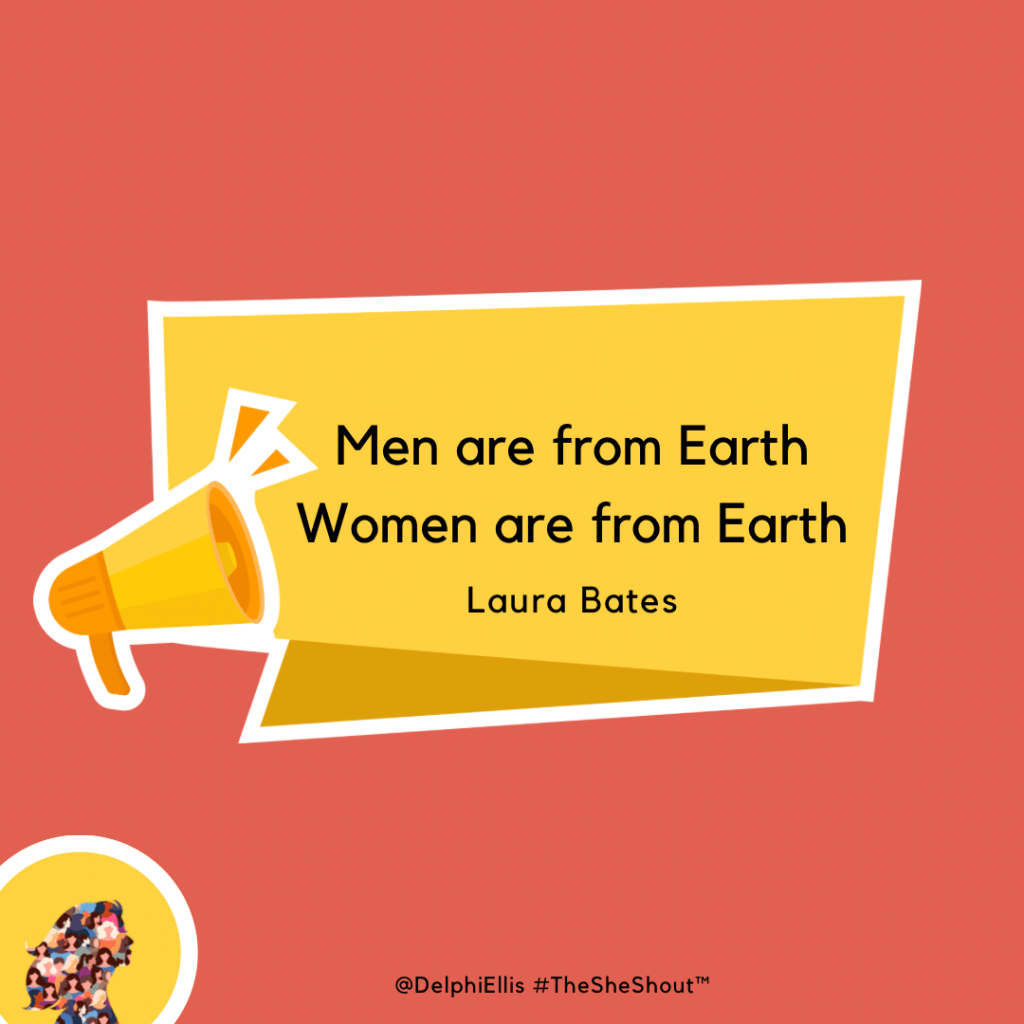
Another way narrow masculinity shows up, is in the frequent rhetoric that “men can’t communicate/express their emotions” which also endorses the idea that “women are too emotional” – a version of the Men Are from Mars, Women Are From Venus concept – neither of which is actually true, nor helpful to men and boys (or anyone else).

Here’s why:

If you’ve ever seen men at a football match, you’ll know many have no trouble expressing how they feel. But some may have been socialised, from an early age, not to talk about certain feelings – the ones he’s been told make him look “soft” or “less of a man” if he shows them; “Big boys don’t cry”.

So it’s not that he can’t express his emotions, but may be that there are few spaces he can do so safely, without fear of ridicule from fellow peers. 

This also demonstrates the performative ways men may try to “impress” other men – even at the expense of other relationships, for example, by talking about how many women they’ve had (or want to have) sex with. A common piece of “dating advice” among men is apparently “to get over a woman, you have to get under one”. This tells men “don’t feel sad, use women to “feel better”.”

So a narrow definition of masculinity includes the (false) idea that expressing certain emotions, like love, makes a man look “weak”. These narratives police emotions, that encourage them to stay silent. And that can have real life consequences, especially if they turn to violence, including towards themselves. It requires men to “perform” for other men, rather than show up authentically to the people they may want to care about.

The Love of Power

So if men are trapped, surely they can just leave The Man Box, right? They’re not helpless to walk away.

But they may behave as if they are, if men are being told they are the “real” victims and no one really cares about them – a common trope in the man0sphere – or believe men are in “crisis”, even though women have the worst mental health (most likely as a result of being oppressed or harmed).

Men’s “friendships” may also be conditional on them acting “man enough”, though again a man is not actually helpless to create a new friendship circle which allows him to be authentic with others, or to assert what behaviours he finds acceptable – or not.

But here’s where it gets worrying: some men may stay in The Man Box, from a false sense of entitlement that women “should” meet their “needs”, as housekeeper, therapist and for sex. For those who support the false belief that men are superior, they may even “justify” violence to get their own way. The more power they have, and the more they love that power, the more they benefit from it; the more they will choose to dominate.

Image: Jenna Gallarzo

Chuck Derry’s work highlighted this: that men who choose violence do so because it’s functional – it gets them what they want.

Until, that is, a man ages out of the ability to “perform” (or people around him walk away from that narrow mindset), and he becomes lonely as a result of his choices.

Mark Greene, from Remaking Manhood, explains Man Box Culture

What about women?

So as well as pushing women away, narrow masculinities also endorse false stereotypes that all women are “hysterical” or “too sensitive” – again, a way of policing emotions and silencing. These narrow ideas also feed a paradox that asserts, on the one hand, women are so unintelligent and “irrational” that they can’t be in a board room, but so manipulating and clever that women should never be trusted. The idea that men should be one thing and women another ignores our differences and the gifts and skills we all bring to the world, regardless of our gender.

Sadly, even women display these narrow ideas of masculinity when they say we should “lean in” to dominant ways of being (eg, at work), or comply with oppressive culture and become “one of the lads”. Or just be “a good girl” and be quiet. 

Alternative title to Girl Up, as explained by Laura Bates

Here’s some food for thought:

💡What if we challenged all of this? What if we created an expansive narrative around men and boys that said they can be – and feel – anything they want, and said the same to women, girls – everyone?

💡What if we allowed people to feel a range of emotion, and encourage them to do the work in developing skills to regulate and express them healthily? 

💡What if we asserted that men and boys are not in fact entitled to dominant behaviours, and that everyone is allowed to exist safely in the world? What if we asserted that no one has the “right” to hurt anyone, especially not because they see themselves as simply “better” than.

That sounds like a peaceful world we could all live in. Why wouldn’t anyone want that?


© Copyright The She Shout™ 2025 | Please read these terms of use.

The problem(s) with “White Ribbon Day”

“White Ribbon” Day is actually the same day as the International Day for the Elimination of (Male) Violence Against Women (and Gender-Based Violence) – IDEVAW. It’s meant to be a day that highlights the harm some men do, and to hear women’s voices and the challenges they face (eg, 2025’s theme was digital harm).

IDEVAW day is not intended to shame men, and not to imply that we need men to protect women (or any other adult), but in fact to ask them to acknowledge the role that men may play in the harm against women, especially if they buy into a system that places women as “weak”.

This year (as it seems every year), instead of handing over the mic, some men saw an opportunity to raise their status for look-at-me likes, be a “White Knight” (itself used in white male extremist rhetoric), and used their platforms to showcase themselves.

As a result, once again, women were erased from the conversation we need to have.

Original image source: unknown.

Ironically, this can reinforce a system that says men are here to save us, when in reality they’re the ones who predominantly turn violent (including towards other men). It also creates a narrow idea of masculinity – of what men “should” be, and their role in the world.

Taking a moral position on misogyny and violence against women only on days of action, especially if it’s to improve one’s brand or reputation (eg, to make someone/an organisation “look good”) is also part of the patriarchal construct that tells men their success is in their status (not character). Something is not always better than nothing, if that something is empty of substance, and feeds the very hierarchy that rewards power and control.

That’s not to say that this is what White Ribbon is about, but it often seems to be interpreted as a man standing up once a year and saying “we should defend the women!” This is then celebrated as men “doing their bit” (in a 60 second soundbite, or photo of themselves on the staff intranet) and as if women should be grateful for that. Labelling it ‘White Ribbon’ also removes the predominant perpetrator from the conversation – violent men.

With that in mind, here’s some food for thought:

💡 Can we agree that notions of “defending women” feeds into the system that places men’s role as simply provider and protector – when men are capable of so much more (like carer and confidante)?

💡And can we then ask, “from whom do women need protecting?”

💡And then if we agree that it’s predominantly men that harm women, can we name it as male violence?

💡And if we can name it as male violence, can we then ask men to interrogate their own daily behaviours and how they even inadvertently feed into the system that harms women – and everyone else?

💡 And can they then do the work of having conversations with other men?

It’s important to show gratitude and appreciation for the men who understand and demonstrate genuine allyship. But if it simply prompts defensiveness, when a woman tries to stick her heads above the parapet, or makes her a target it’s no wonder women may be scared to ask men to listen – and that’s the point. And if a man’s response is “well we just won’t do anything then!” – that may feel no different to any other day.


© The She Shout– All rights reserved. If you are affected by any of the topics covered in this piece you may find these links helpful.

The International Day for the Elimination of Violence Against Women (25th November)

25th November is the International Day for the Elimination of Violence Against Women, the start of the 16 days of activism. It’s an opportunity to address a small but important detail:

The predominant perpetrator of violence – globally – especially including violence against men, is violent men, and it’s a conversation we should be able to have

Here’s some ideas worth thinking about:
💡 Look at the problem holistically. Join the dots between who the predominant perpetrator is – violent men – and the mindset behind it: suprem*cy and entitlement
💡 Take time to learn about misogyny and the overt – and covert – ways it shows up in systems and policy, including dress code and the gender pay gap
💡Where it’s safe to do so, challenge harmful and unhealthy narratives that aim to assert power and control, particularly over women. Set organisational, workplace and family values that make it clear what will – and won’t – be accepted in an enlightened society. Teach pacifism alongside the 5Ds of bystander intervention and make it safe(r) for people to step up and step in.
💡Recognise that this is a societal problem – a moral issue – not a psychological one, and how all types of violence intersect. Address direct violence – including through the words we use – as well as institutional and structural harm. Racism, homophobia, ableism, transphobia, Islamophobia and all forms of hate and harm (including war, domestic abuse and human trafficking) are not caused by “mental illness” or “loneliness”, but harmful beliefs about the “right” to dominate rooted in patriarchal structure. Reject ideas that seek to objectify, subjugate, oppress and possess women, alongside narrow ideas of masculinity, that harm everyone – including men.

Otherwise we have to ask, whether or not we really have “come a long way.


© The She Shout™ – All rights reserved. This blog may appear in an adapted format on other sites hosted by the author, and/or be duplicated here for reference. 
Have we really “come a long way”…?

⚠️ Note to the reader: this article (and website) discusses male violence towards women including rape; the author recognises that all genders are capable of harm, and that all genders can experience harm. You can read more about the ethos of this website and the terms of use.


A common reply, when trying to have a conversation about male violence against women, is “but surely we’ve come a long way”. Some assert women’s rights have gone far enough, while others even suggest “feminism” – the call for equity – has gone too far.

History provides an interesting insight into the progress we’ve actually made, and possibly even how far we still have to go. So let’s take a look:

1. Seeking refuge

In 1895, a City of London bylaw appears to make it illegal for a man to hit his wife between the hours of 10pm and 7am – not for her sake, but because the noise from the violence was keeping neighbours awake.

Why didn’t she “just leave”? In the book, The Five, Hallie Rubenhold explains that when a woman was being subjected to domestic abuse, she often had no option but to go with her children to the workhouse.

These were not pleasant places of refuge or respite.

As well as being scrubbed on arrival in the same water as others had been all day, the woman would potentially be separated from her children if they were older than 7 years old – all were put to work. But before she could even be admitted, the woman had to be able to unequivocally prove that she was being harmed and wasn’t going to be a drain on the state.

Rubenhold explains, that in the 1876 Handbook for Guardians of the Poor, the advice to the onsite officers, was “to make a thorough investigation into such a woman’s circumstances before permitting her to become the object of sympathy”. And if, on speaking to her husband to “verify her story”, he simply said she was a liar or a drunk, she’d be sent away to live on the streets.

Sound familiar? In 2021, the charity St Mungo’s reported that 35% of women they worked with, who had slept rough, left home to escape violence. In 2025, the latest research found that the number of women sleeping rough has been dramatically underestimated.*.

Common tropes that women should “just leave” (or report) are also still pervasive today. Court delays alone, never mind the traumatisation that occurs in the criminal justice system, as well as limited access to funds, are enough to put women off today.

While by Victorian England, wives could “no longer be kept locked up or sold into prostitution” by their husbands, and “life-threatening beatings” were considered grounds for divorce, it wasn’t until 1966, that New York became the first US state to adopt the same grounds – though wives had to show that “a sufficient number of beatings” had taken place.**.

2. Money

The Married Women’s Property Act was passed in 1870.   This initial act allowed women to keep their earnings and some property acquired after marriage as their own.

However, it wasn’t until The Equal Franchise Act of 1928 granted equal voting rights to women and men that both women and men could vote at the age of 21.  The first general election that women were allowed to vote in was 1918, but only if they were over the age of 30 and were “householders, the wives of householders, occupiers of property with an annual rent of £5, and graduates of British Universities…”

Until The Sex Discrimination Act was passed in 1975 though, British women did not have the right to open a bank account, have a credit card, or take out a loan (including a mortgage) in their own name.

3. Health

In the UK, women gained widespread access to contraception through the National Health Service (NHS) in 1967. The act enabled local health authorities to provide family planning advice and services to a wider population, previously limited to women whose health was at risk from pregnancy. The contraceptive pill was introduced in 1961, but a 1967 act made it more readily available through the NHS.

However, abortion is only legal in the UK if certain conditions are met; a woman still doesn’t have full autonomy of her body, or health choices particularly in early pregnancy. In certain parts of America, it’s reported that the termination of pregnancy is also illegal, apparently regardless of the circumstances.

4. The Law

In England and Wales, marital rape became a crime in 1991.  Prior to this, consent for sexual intercourse was considered “implicit in the marriage contract.”

Coercive control became a criminal offence within an intimate or family relationship  under Section 76 of the Serious Crime Act 2015. However, there is still a general lack of awareness of what constitutes coercive behaviour (even among some professionals), including manipulation (such as creating feelings of guilt to exploit a response), gaslighting (designed to confuse someone and what they know to be true), isolating a woman from her family and friends, and making her do things she doesn’t want to do in any capacity, from financially to sexually.

But the challenges don’t end there. A law even then had to be created that made the act of taking a sexually intrusive photograph up someone’s skirt without their permission; this came into effect under The Voyeurism (Offences) Act 2019.

The Domestic Abuse Act came in to effect in 2021.  The Act establishes a legal definition of domestic abuse, clarifying that it encompasses more than just physical violence, including emotional, coercive, controlling, and economic abuse.  It includes offences such as stranguIation and threatening to share explicit photographs.

5. Societal Attitudes

Some people may well consider this “progress”, but it begs the question whether societal and decision maker attitudes today about men’s violence really have changed, or if we’re actually regressing.  Recent studies. regarding the prevalence of misogyny in online spaces would suggest the latter is the case. 

While in some quarters, there may have been a shift in terms of placing the responsibility on the harm doer, in other parts of society (and “institutions”) a culture of victim blaming still exists, and one that may even collude with the perpetrator. 

Nothing changes if nothing changes; if we want something different we have to do something different. The She Shout™ (and affiliated The She Course™) asserts that change starts with acknowledging there’s a problem, and expanding ideas around masculinity and – what it really means to “be a man” – rejecting dominance-based behaviours, that seek power and control. Because in the end, male violence hurts everyone, men included.


 © Copyright The She Shout™ 2025 | Please read these terms of use.


Sources include: