⚠️ Content Warning: the articles on this website often refer to male perpetrated violence, domestic abuse, sexual violence, harassment and femicide. If you are affected by any of the topics covered in this piece you may find these links via The She Course (Healing for Her)™, helpful.
The author writes from an integrated feminist, pacifist and (non-denominational), spiritual perspective and acknowledges that people of all genders can be violent; this website asserts that all forms of hate are unhealthy. If the content doesn’t reflect your lived experience, readers are encouraged to set up their own website/movement/magazine, within their means, on topics close to their heart, as this author has. Please read these terms of use.
The research now shows us that all humans are capable of compassion from a young age, and babies demonstrate empathy before they can even speak; we are not born hating anyone.
The science also asserts that humans have the capacity for change – if that’s what we want.
So while this online magazine centres around ending male violence, particularly towards women and girls (MV(AWG)), discussions presented here are far from “man hating”; this movement believes in men’s potential for change and their ability to show up in the world with empathy and compassion.
However, in this context, this also means not excusing violent choices that some men make.
Fierce Compassion
The famous Buddhist nun, Pema Chödrön, once suggested that preventing someone from harming another is one of the most authentic gifts of compassion we can offer, not just to the person harmed, but to the harm doer.
Addressing and preventing male violence doesn’t mean we lack compassion for the violent man as a human, in fact, it means we demonstrate it – through what Dr Kristen Neff calls “fierce” compassion; ie we avoid token sympathy and destructive empathy that makes excuses for him (known as “himpathy”).
Fierce compassion is about meaningful action that highlights how and why violent men must change. This is especially the case if he wants to be a welcome citizen of an enlightened society, experiencing authentic love and connection.
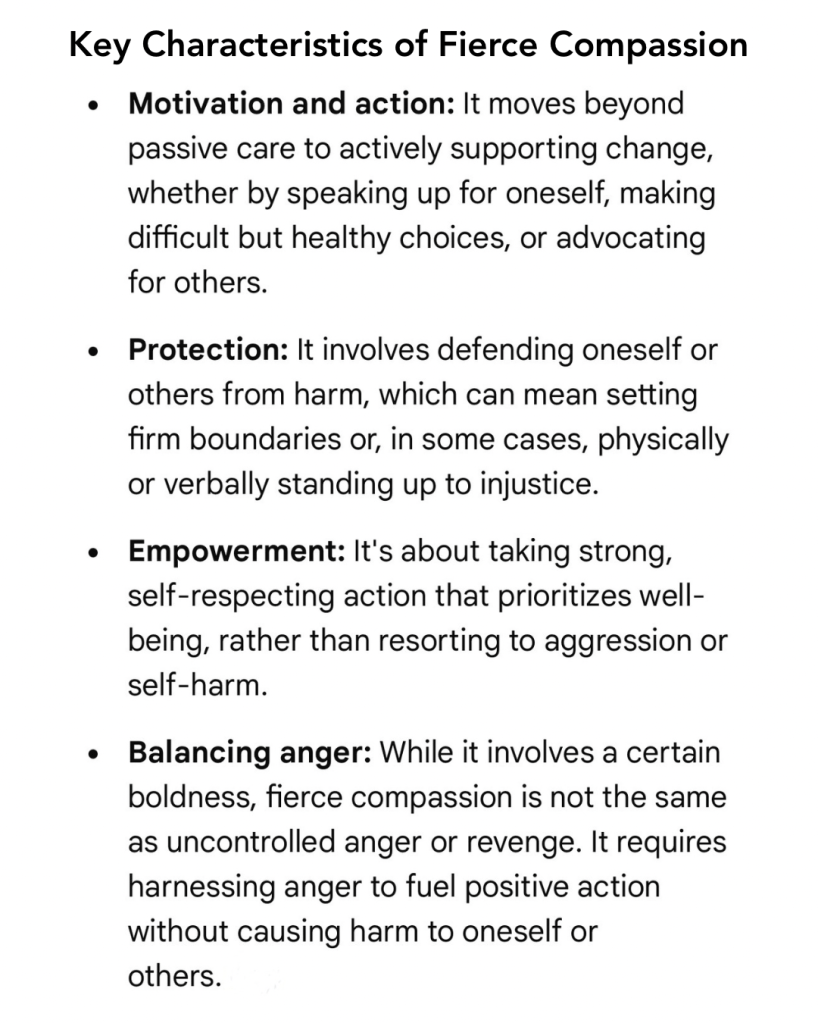
We can show fierce compassion through a model focused on education (prevent), holding abusive men to account (pursue) and community care (protect the harmed).
This movement promotes gender equity through community care, encouraging coalition and collaboration (not separation, polarisation and divisiveness) and asks for collective action for meaningful change, highlighting the important role all men play in making this a reality.
1. Prevent: We compassionately educate.
We recognise that some men may have invested their identity in what it means to “be a man”, including flawed ideas of superiority, entitlement and unhealthy emotion expression.
Many men have been socialised into narrow ideas of masculinity, perhaps with stereotypes such as being solely a “protector and provider” ; this narrow version of what it means to “be a man” keeps men trapped is what Paul Kivel referred to as “The Man Box”.
Similarly, some men may have bought into ideas of male suprem*cy, which centres entitlement and ownership of women, through dominance, subjugation and oppression. Education can highlight how this harmful ideology is hurting everyone, including men and boys, such as the fathers, brothers and sons of murdered women.
We raise awareness in the hope he may find harmful behaviours so unappealing and unacceptable, that he rejects power and control and chooses learning and connection. This way, he realises he is not helpless or a passenger in his own life to be led by or perform for other men. He can develop emotion regulation skills, reflect upon and challenge any beliefs he has around entitlement, and not expect women to “meet his needs”. A man can be enough without the trappings of an ideology that narrows what men can and “should” be.
Learning can also emphasise that violence is not predetermined or “in his nature”, and that we do a great disservice to men and their capacity for caregiving and self-control, when we imply that “he just can’t help himself”.
This also highlights that men’s violence is not simply because “he had a hard life” or “due to his mental health”, and that this harmful pathologisation of violence is deeply stigmatising to the millions of people who have also been subjected to harm or suffering, yet do not hurt anyone. The framing “hurt people hurt people” ignores the reality that violence is functional – violent men benefit from it – and seeks only to absolve him, rather than hold him accountable.
Violence is a choice, and we know this because he chooses who and when he harms. Chuck Derry’s findings demonstrate that he hurts because he can, because he benefits through power and control, and because he (wrongly) believes he has that “right”.
This means violence is preventable and science tells us that change is possible.
In the context of male violence, The She Shout™ and affiliated The She Course™, addresses violence in adult men (ie over 18, as younger conversations require additional specialist knowledge), but raises awareness of how even misogyny can show up in young boys, rooted in entitlement. We therefore need to assert that he doesn’t have the right to objectify, subjugate, oppress and possess any woman.
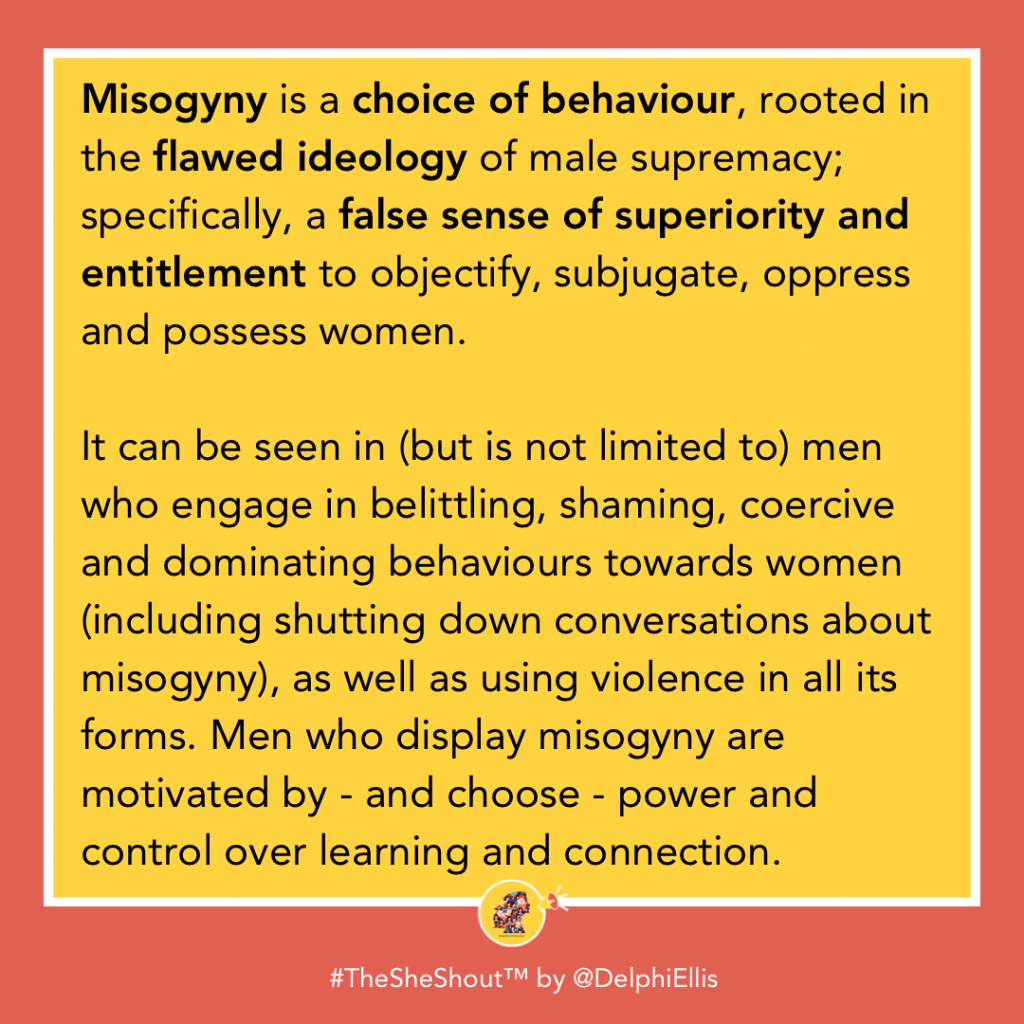
It’s important to also highlight the prevalence of men’s violence on a global scale – reinforcing that it is preventable – and explain the flawed ideology of suprem*cy that can sit behind it, which has been present for centuries.
Through education, we can also raise awareness of how violence intersects and takes shape through marginalisation and oppression of others such as with racism and homophobia.
This ultimately asserts that we all – every one of us – has the right to exist safely.
2. Pursue: We compassionately create environments that make it impossible for an abusive man to continue harming.
This can be done by demonstrating non-violent hostility towards harmful discourse. We can make it clear that, as a society, we are not prepared to accept damaging narratives and actions in our homes, workplaces and public spaces, and that harmful actions have consequences.
Everyone is welcome in an enlightened society, yet we reject harmful ideology that implies one human (including race or gender) is “better” than another.
Here, we can create cultures of upstandership, where we develop workplace and societal values that reject misogynistic (and all discriminatory) language and behaviours.
We can champion non-violence, healthy relationships, and affirmative consent. We can ask men who wish to become “allies”, to reflect on their own beliefs and behaviours, educating and engaging other men in doing the same.
We can stop normalising harmful actions and toxic narratives like “boys will be boys” or “he hits you because he likes you”. We can choose not to make flawed excuses for violent men (like “it’s just who he is” or “it’s because he drinks”) that enable him, and give him a free pass to continue.
We can create conditions of “affectionate detachment” where we assert that harmful views and actions will be challenged, even if that means individuals are then not welcome until or unless they change. To paraphrase Elizabeth Gilbert, “We can love everybody, but some we must love from a safe distance”.
3. Protect: We compassionately step up.
This magazine and movement assert that men are ideally placed, as upstanders, to challenge other men who display unhealthy narratives. We welcome active allyship where male allies recognise that male violence is hurting everyone, including men and boys.
We question simplistic narratives that seek to pathologise men’s violence as caused by “loneliness”, or that centre any past trauma as the excuse for his current behaviours. We do a great disservice to men if we imply that they have limited ability for transformation, to achieve authentic love and meaningful connection. All humans are capable of achieving enlightened behaviour.
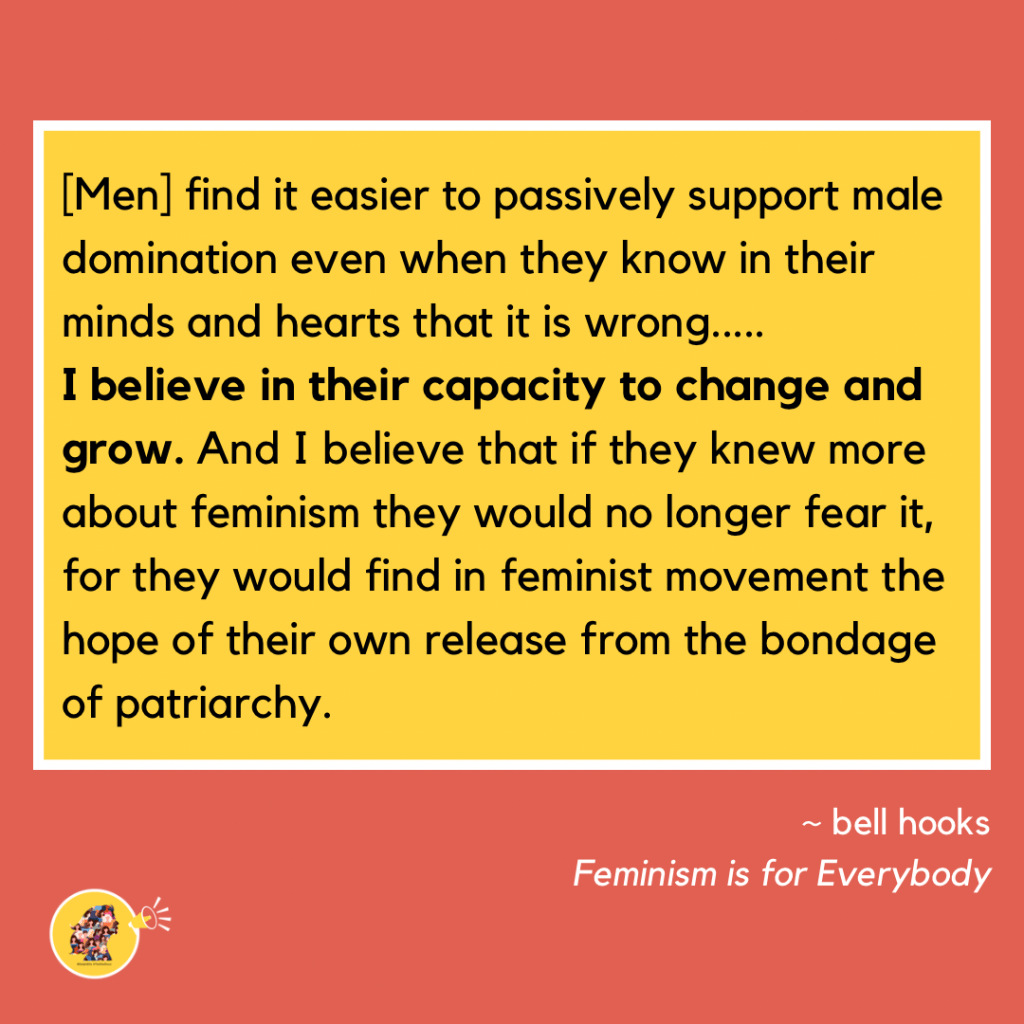
We believe that men can be wholesome humans, with or without a partner, and that a relationship is not what “makes him a man”. We reject narrow definitions of masculinity that imply his only potential is to become a “protector and provider”. We believe men can be care givers, demonstrate traditionally “feminine” qualities and are capable of expressing emotion – even intense ones – in healthy ways.
We flag the importance of and challenge men to do the work of finding peace in themselves, rather than expecting women to do the emotional labour of regulating him and “keeping him happy”, by fulfilling all his “needs”. The work of men regulating their own emotions should not fall to women.
We assert that we, as a society, must non-violently strive to make it so difficult for him to continue, to make his violence so socially unacceptable, that he chooses peace instead, and understands why.
By choosing to address his beliefs and behaviours, and recognise the privilege and the benefits afforded to him of being a man (like the gender pay gap and healthcare), he can begin an empowering process of change. Otherwise the violence will continue and, in the end, hurts us all.
Fundamentally, the author of this website and the movement it hopes to achieve, believes in the good in everyone, men included.
Who’s behind the website?
The author of this website is Delphi, who writes from a pacifist, (non-denominational) spiritual and feminist perspective. Delphi has long believed that spirituality is an important part of our well-being, and is most “famous” for her work talking about dreams. She believes that women are authentically present when they lean into their spiritual side.
As this ethos hopefully shows, pacifism is not the same as passive, feminism does not mean excluding men, and spirituality doesn’t always mean taking about religion. In the context of this website, Delphi blends Quaker principles, Buddhist philosophy and a belief that God loves women, so men should respect them and their safety too. While it focuses on non-violence and not harming others, this also means not sitting idly by while some do.
Delphi is a qualified counsellor, educator and author, with lived experience of being harmed by domestic abuse, who has also worked with victims subjected to and families bereaved by male violence.
Copyright: The SHE Course: Healing for Her™ (2025) All rights reserved. Please read these terms of use.
 The She Shout ™
You must be logged in to post a comment.