
Note to the reader: I write in the context of discussing male violence against women because of my lived and professional experience, hence tending to use“he” in my articles. I approach conversations from a pacifist lens, incorporating spirituality and feminist theory.
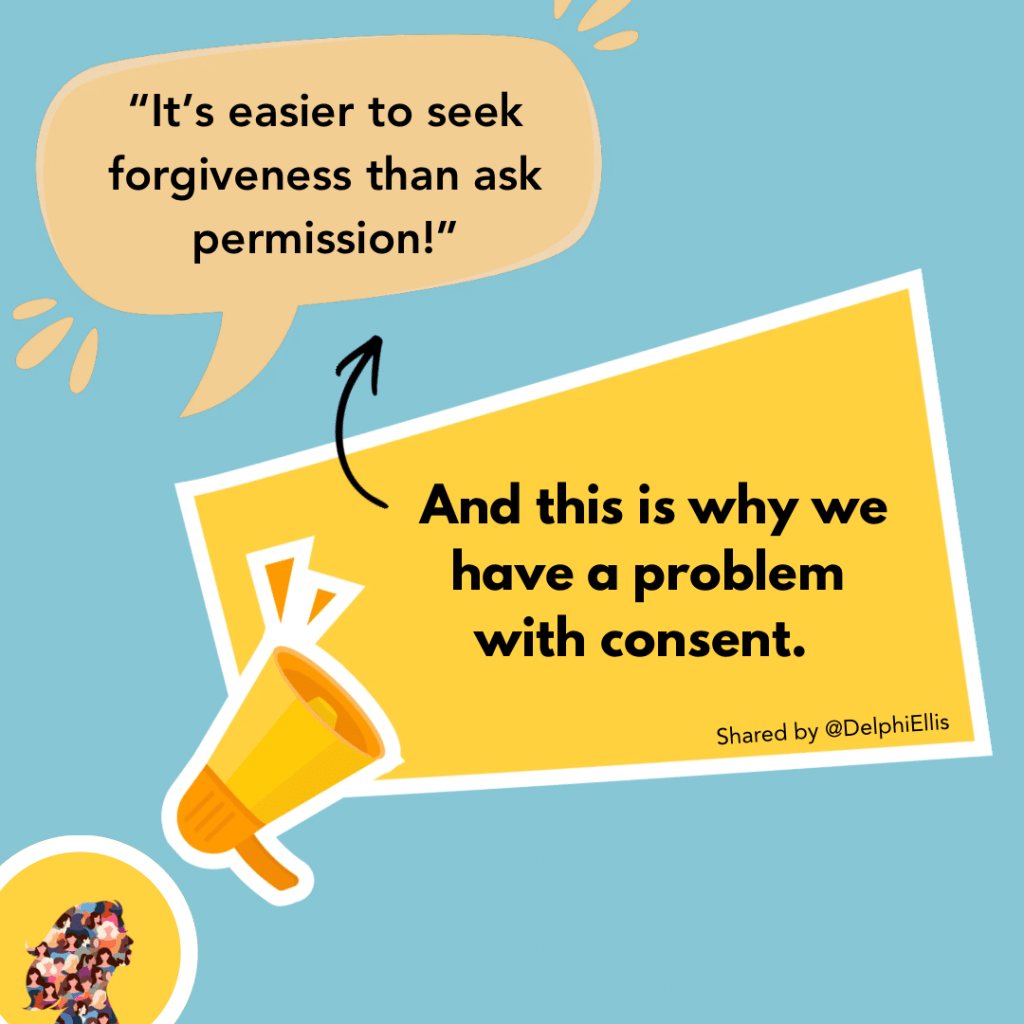
You’ve probably heard this phrase: “It’s easier to seek forgiveness than ask permission!”
It’s considered a lighthearted phrase, to “justify” taking action without checking the “rules”. But is there a problem with that?
Some people, particularly those with a sense of superiority or privilege, may think it’s simply their “right” to do what they want, and they’ll be able to smooth it over. After all, an apology demands forgiveness, right? Wrong.
Let’s unpack it.
There are many ways we accept and normalise wrongdoing, that potentially have a wider impact.
It shows up in comments like “that’s just how he is” or “he’s always been that way”, in response to a disclosure of the harm he’s done. Whether it’s normalising a micro aggression or dismissing abuse, it gives him a free pass to continue.
The value of an apology
A boundary violation is when a person oversteps the mark unintentionally, and can be easily repaired. A boundary invasion is when a person knew it was wrong and did it anyway. Either way a proper apology is required, though it’s harder to accept when someone wilfully did what they wanted, or didn’t care about the consequence.
What value does an apology have if it’s diluted by the person who knew what they did was probably wrong? Despite what some might think, we’re not obliged to forgive someone who wilfully behaved in a way that wasn’t ok. Especially if they show little remorse.
So who is forgiveness really “easier” for?
No doubt in the mind of someone who feels entitled to behave how they want, it’s “easier” for them to just take, or do something or say whatever they want in the belief that they can just say sorry and it “should” be accepted.
And what does it say about society’s view of consent, if it believes an apology for wilful behaviour should simply be enough, regardless of the harm that’s been done or how it enables the harm doer to continue?”.

If parts of society feel a duty to “protect women” but demonstrates an apathy for meaningful change, that creates the conditions and upholds the systems where a man (in this context) prioritises his “right” to do what he wants, who is society really protecting?
These are questions worth asking, I think.
© The She Shout™ All rights reserved. The She Shout™ is an opinion website, click here for terms of use. This article may appear elsewhere on websites affiliated to the author.


You must be logged in to post a comment.